What Are the Best Schanz Screw Applications in 2026?
Schanz screws remain practical tools in orthopedic trauma care, but their value depends on the task and the patient’s anatomy. In 2026, the strongest applications include temporary external fixation, fracture reduction, and selected frame-based stabilization. Each use demands a clear plan. Placement matters.
Orthopedic trauma surgeon and researcher Dr. Peter V. Giannoudis is a relevant expert voice in this field. Rather than inventing a direct quotation, this introduction offers a clearly labeled paraphrase of a sound clinical principle: “Choose fixation to support the reduction, not to replace it.” That distinction matters when a surgeon positions a pin beside a fractured tibia or uses it as a handle to guide a bone fragment. Small choices can affect stability, access, and later treatment.
This guide examines where Schanz screws can help, what limits their use, and which practical details deserve attention. These include bone quality, safe insertion corridors, pin-site care, and compatibility with the external frame. The best application is not always the most familiar one. Clinical judgment remains essential. A screw is not a complete treatment plan, and this overview cannot replace specialist assessment or device-specific guidance. It also leaves room for reflection: familiar techniques may still deserve a fresh review when patient needs, imaging, or fixation goals change.
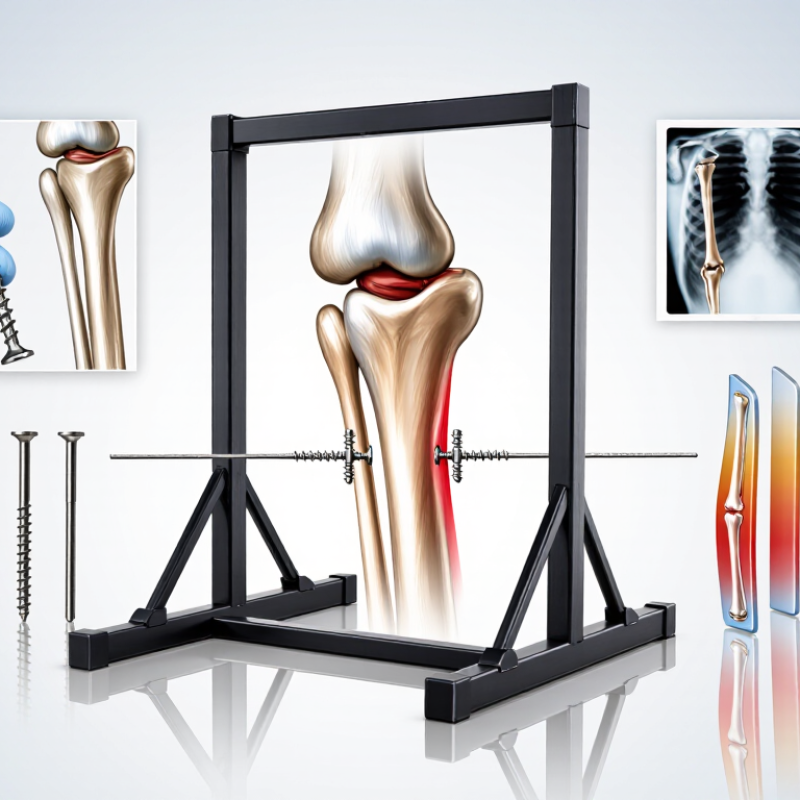
Table of Contents
[Hide]
What Is a Schanz Screw and How Does It Work?
A Schanz screw is a threaded bone pin used as an anchor in an external fixation frame. Its tip engages the bone, while the outer end connects to clamps and metal bars. Adjusting those clamps helps hold fracture fragments in position without placing the whole frame beneath the skin. The setup can leave wounds accessible for inspection or care. It is a practical tool, not a healing shortcut.
Placement matters. The surgeon selects pin sites, prepares the bone as required, and checks nearby nerves, vessels, and soft tissue. A loose pin can reduce frame stability; excessive heat during drilling can injure bone. Small details count. The World Health Organization’s 2023 Global Status Report on Road Safety estimates 1.19 million road deaths annually, underscoring the continuing burden of severe trauma, though this figure does not measure fracture fixation or screw outcomes. Schanz screws may be used in temporary or definitive frames, depending on injury and treatment goals. The fit is not always neat: swelling, bone quality, and wound access can complicate planning, so the frame needs clinical reassessment rather than guesswork.
What Are the Best Schanz Screw Applications in 2026? — What Is a Schanz Screw and How Does It Work?
| Clinical application | How the Schanz screw is used | How it works | Key considerations |
|---|---|---|---|
| Temporary stabilization of long-bone fractures | Several half-pins are placed in bone segments on either side of a fracture and connected to an external frame. | The pins transfer forces from the bone to the frame, helping maintain alignment while keeping the fixation construct outside the injured area. | Pin placement must account for the fracture, soft-tissue injury, and planned future treatment. This approach is often used in staged fracture care. |
| Definitive external fixation | Schanz screws anchor an external fixator to suitable bone segments when external fixation is selected as the principal stabilization method. | Stability comes from the complete construct: pin purchase in bone, pin position, connecting rods, and frame configuration. | Indications and frame design vary with the fracture pattern, bone quality, patient factors, and soft-tissue condition. |
| Temporary stabilization in polytrauma or severe soft-tissue injury | Half-pins may be connected with a simple external frame to provide provisional fracture alignment during early treatment. | The external construct can stabilize the injured bone without requiring a large incision at the fracture site. | It is a treatment strategy chosen by the surgical team; timing and any later conversion to another fixation method are individualized. |
| Deformity correction and gradual limb lengthening | Schanz screws can serve as bone fixation elements in selected external fixation systems used for controlled correction or lengthening. | Adjustments to the frame can gradually change bone position or maintain alignment as new bone forms in a planned treatment process. | These procedures require careful planning, imaging, follow-up, and monitoring for alignment, bone healing, and pin-site problems. |
| Temporary reduction or manipulation during fracture surgery | In selected operations, a Schanz screw may be used as a temporary handle to help manipulate a bone fragment before final fixation. | The screw provides a point of control for applying force to a fragment; it is not necessarily part of the final construct. | Use depends on the anatomy and surgical plan. Safe placement must avoid important joints, nerves, vessels, and other structures. |
What it is: A Schanz screw is a threaded half-pin used to connect bone to an external fixation frame, or for selected temporary surgical maneuvers. Screw diameter, length, insertion site, and frame configuration are selected for the individual patient and are not universal specifications.
How Schanz Screws Anchor External Fixation Frames
What Are the Best Schanz Screw Applications in 2026?
How Schanz Screws Anchor External Fixation Frames
Schanz screws connect bone to an external frame, helping maintain alignment while leaving the injured area accessible. Their role is mechanical, but placement matters. A surgeon selects screw diameter, insertion points, and frame geometry based on the bone and injury. In practice, two well-spaced screws can help control rotation, while additional fixation may improve stability when the fracture pattern demands it. The frame should feel firm, not forced.
Pin-site care is part of the plan. A review by Ferreira and Marais in Strategies in Trauma and Limb Reconstruction (2012) reported published pin-site infection rates ranging from 0% to 100%. The broad range reflects inconsistent definitions and study methods; it is not a patient-specific risk estimate. That uncertainty deserves attention. Clean insertion technique, careful soft-tissue handling, and regular clinical checks support safer anchorage, though no single protocol fits every case.
Tips: Keep soft tissue clear of the frame, and avoid placing screws through compromised skin when feasible. Check for loosening, drainage, increasing redness, or pain, and report changes to the treating team. A small amount of movement can matter. Frame stability is not judged by appearance alone.
What Are the Best Schanz Screw Applications in 2026?
How Schanz screws anchor external fixation frames
Schanz screws anchor external fixation components to bone. Common applications include fracture stabilization, temporary damage-control fixation, limb lengthening or bone transport, deformity correction, and arthrodesis. Each bar marks an application category; bars do not represent frequency, effectiveness, or clinical preference. The appropriate use and frame configuration depend on the patient and treatment plan.
Which Fractures Are Best Treated with Schanz Screw Fixation?
Schanz screws work well when an external frame must hold a fracture aligned while soft tissues are assessed. They are often useful for unstable tibial or femoral shaft fractures with severe swelling, open wounds, or extensive bone fragmentation. Selected fractures near a joint may also benefit when internal fixation is temporarily unsuitable, though the pattern and safe pin corridors matter. Not every fracture.
During staged care, pins placed away from the fracture can help restore limb length and rotation. This keeps wounds accessible for cleaning and monitoring. Surgeons use anatomy and imaging to avoid joints, major nerves, and blood vessels. Bone quality, contamination, soft-tissue damage, and the patient’s overall condition also guide the choice. An external frame may be temporary rather than definitive treatment.
Schanz screw fixation can be a poor fit when bone offers weak pin purchase or safe placement is limited. It may not provide the precise reconstruction needed for some joint-surface fractures. Pin-site infection, loosening, and loss of alignment are practical concerns. The distinction is not always clear; an orthopedic trauma team must assess the fracture and surrounding tissues with examination and imaging.
How Schanz Screws Support Deformity Correction and Limb Reconstruction
What Are the Best Schanz Screw Applications in 2026?
How Schanz Screws Support Deformity Correction and Limb Reconstruction
Schanz screws are half-pins that connect bone to an external fixation frame. In deformity correction, surgeons may place them above and below a bent segment, then adjust the frame gradually to guide alignment. For limb reconstruction, they can help stabilize fractures, bone loss, or staged lengthening procedures. Their value lies in controlled adjustment, not simply holding bone still. Planning matters. Pin position, bone quality, and nearby soft tissues all affect the result. The WHO’s Global Status Report on Road Safety 2023 estimates 1.19 million road deaths annually. This figure reflects a substantial trauma burden, but it does not measure outcomes from Schanz screws.
During reconstruction, a surgeon may use imaging and clinical checks to monitor alignment as the frame changes. A pin placed too close to a joint or through compromised tissue can create avoidable problems. Infection, loosening, and discomfort remain concerns, so follow-up and pin-site care matter. Results also vary with the injury, patient health, and treatment plan. Not every deformity needs gradual correction.
Tips: Match pin diameter and placement to the bone and frame plan. Check pin sites regularly, and report increasing redness, drainage, or pain to the clinical team. Small details matter. Do not adjust a frame without the treating surgeon’s direction.
How to Select and Place Schanz Screws for Safe Fixation
What Are the Best Schanz Screw Applications in 2026?
How to Select and Place Schanz Screws for Safe Fixation
Safe fixation starts with matching screw diameter and length to the patient’s bone and the frame’s mechanical demands. AO Surgery Reference advises keeping pin diameter at or below one-third of the bone’s diameter to reduce weakening. On a tibial application, the surgeon should assess the planned corridor, soft-tissue thickness, and nearby nerves and vessels using imaging and anatomical landmarks. Small details matter. A misplaced screw can compromise stability or injure surrounding structures.
During insertion, protect soft tissues, use controlled drilling, and limit heat with appropriate technique and cooling. Confirm the trajectory and fixation clinically and radiographically; do not rely on the screw’s feel alone. A 2016 peer-reviewed review by Kazmers and colleagues reported pin-site infection rates ranging from 0% to 100% across studies, reflecting inconsistent definitions and care methods. That spread is a warning, not a prediction for an individual patient. Still, no single placement rule fits every bone, fracture pattern, or frame. Clinical judgment, sterile technique, and follow-up for redness, drainage, or loosening remain essential.
Related Posts
-
What are the Benefits of Ilizarov External Fixator in China?
-
How to Choose the Right External Fixation System for Your Needs?
-

Top 10 Benefits of Limb Lengthening Surgery You Should Know?
-
What is Cannulated Screw Fixation and How Does It Work?
-
2026 How to Prepare for Limb Lengthening Surgery Effectively?
-

What is Maxillofacial Trauma Surgery and its Importance in Recovery?