
What Is a HIFEM Slimming Machine and How Does It Work?
A HIFEM Slimming Machine uses high-intensity focused electromagnetic energy to stimulate powerful muscle contractions. These contractions are stronger and more frequent than most people can produce voluntarily. During a typical session, an applicator rests against the abdomen, buttocks, arms, or thighs. The area may feel like rapid tapping, tightening, or repeated muscle flexing.
It is not a traditional weight-loss machine. The technology mainly targets muscle stimulation and body contouring. Researchers suggest that intense contractions may support muscle strengthening and changes in local body shape. Some devices also combine HIFEM with radiofrequency energy, which may warm the skin and underlying tissues. However, results depend on the device, treatment settings, body condition, and lifestyle habits. The word “slimming” can sound more dramatic than the evidence allows.
Clinical experience matters. A qualified provider should review medical history, examine the treatment area, and explain realistic outcomes. Visible changes may require several sessions and consistent nutrition and activity. Mild soreness can occur afterward, similar to post-workout discomfort. Safety is not automatic. People with certain implanted electronic devices, metal components, pregnancy, or specific medical conditions may need to avoid treatment or obtain medical clearance. Professional guidance is essential.
The evidence is promising, but not perfect. Studies vary in size, design, and follow-up time. Individual results can also be uneven. One side may respond differently from the other. This article explains how a HIFEM Slimming Machine works, what users may experience, and why informed expectations remain important.
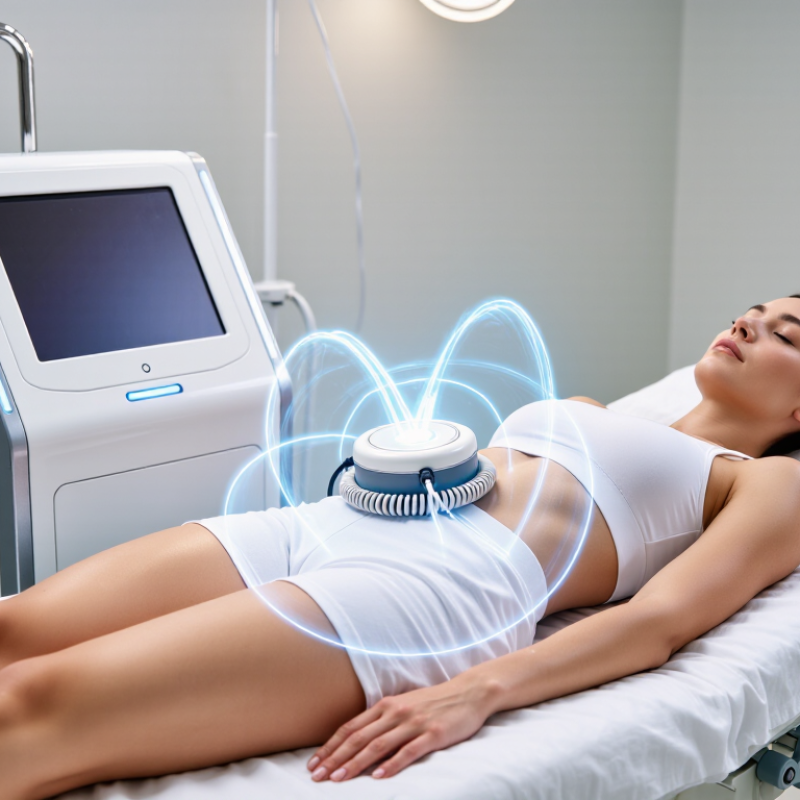
Table of Contents [Hide]
What Is HIFEM? Electromagnetic Energy and Up to 20,000 Contractions
HIFEM stands for high-intensity focused electromagnetic energy. A treatment applicator rests against the skin while electromagnetic pulses stimulate nearby motor nerves. These signals prompt muscles to contract without the person deliberately tightening them.
The sensation may feel like repeated firm tugs, with pauses as the device changes intensity. It can be unusual at first.
“Up to 20,000 contractions” describes a commonly cited estimate for some treatment protocols, not a guaranteed count for every device or session. Settings, session length, and individual response all matter.
During a session, a practitioner typically adjusts the intensity to the person’s comfort and treatment area. The contractions may become stronger over time, but discomfort should be discussed rather than endured in silence.
HIFEM is intended to stimulate muscle activity; it does not replace exercise, balanced nutrition, or medical care.
Claims about visible body changes should be interpreted cautiously, since outcomes vary and research does not guarantee a particular result.
People with implanted electronic devices, certain medical conditions, or pregnancy concerns should seek qualified clinical advice before treatment.
Even the impressive number needs context: more contractions do not automatically mean better results.
How HIFEM Produces Supramaximal Muscle Contractions in 30 Minutes
A HIFEM slimming machine uses pulsed electromagnetic fields to stimulate motor nerves beneath the skin. These signals trigger repeated muscle contractions without requiring voluntary movement. In a typical session, an applicator rests against the abdomen or buttocks for about 30 minutes. The sensation can feel like firm, rhythmic tightening. It is not ordinary exercise, and the intensity should be adjusted by a trained provider.
“Supramaximal” describes contractions that exceed what most people can produce voluntarily. During one session, muscles may contract thousands of times, with brief rest periods built into the protocol. That sounds dramatic. It does not mean every contraction builds lasting strength. A 2019 MRI study by Kinney and Lozanova reported increased abdominal muscle thickness and reduced fat thickness after a four-session protocol, with follow-up at three months. The findings are encouraging, but the study was limited in size and does not guarantee the same results for every person.
HIFEM is a body-contouring option, not a substitute for exercise, nutrition, or medical care. Results vary with treatment settings, anatomy, and consistency. Evidence also remains uneven across body areas and protocols. A provider should review relevant medical history, explain expected sensations, and discuss realistic outcomes before treatment. Be cautious of claims promising dramatic or permanent changes from one session.
How HIFEM May Reduce Fat: Clinical Reports of Up to 19% Reduction
A HIFEM slimming machine uses high-intensity focused electromagnetic energy to create powerful muscle contractions. These contractions resemble an intense workout, although the user remains still and fully clothed. On the abdomen, the muscles may visibly tighten and release. Sessions are noninvasive, but they can feel demanding. That distinction matters. HIFEM is not a substitute for exercise, balanced nutrition, or medical care.
Clinical reports have described up to a 19% reduction in fat thickness in treated areas. However, this is an upper reported result, not a promise for every patient. Outcomes may depend on treatment settings, body composition, session frequency, and measurement methods. Researchers may use imaging, calipers, or physical assessments. Each method can produce different findings. Visible changes are often gradual. The scale may change little. Body contouring is not the same as weight loss. That can be disappointing.
Reliable treatment starts with a qualified medical assessment. A clinician should review health history, medications, pregnancy status, and implanted electronic devices. People with certain conditions may need medical clearance or another option. Good providers record measurements under consistent conditions and explain realistic expectations. Some studies have small samples or limited follow-up periods. The evidence is promising, but not perfect. It is easy to overread one percentage. More independent, long-term research would clarify how durable the reported fat reduction really is.
Which Body Areas Are FDA-Cleared for HIFEM-Based Contouring?
A HIFEM slimming machine uses focused electromagnetic energy to trigger powerful muscle contractions. One session may produce thousands of contractions that ordinary exercise cannot easily replicate. The result is muscle stimulation, not direct fat removal. FDA 510(k) records describe these devices as non-invasive body-contouring systems with specific indications.
The most consistently FDA-cleared areas are the abdomen and buttocks. Some device clearances also include the thighs, but this depends on the exact 510(k) submission. Clearance is not blanket approval for every body area. Read the device’s indication carefully. A 2023 clinical review found that studies commonly used four sessions, often lasting about 30 minutes each. Follow-up periods varied, so long-term results remain less certain.
Clinical reports often describe temporary muscle soreness, similar to post-exercise fatigue. That detail matters. A treatment that feels intense is not automatically more effective. Published evaluations have reported improved abdominal muscle tone and modest contour changes, but outcomes differ with muscle condition, body composition, and treatment settings. The FDA database provides regulatory evidence, while peer-reviewed studies provide clinical context. Neither source promises a specific waist size. Some marketing claims still sound too confident. That deserves scrutiny. HIFEM contouring may complement exercise, but it should not replace strength training, nutrition, or professional medical assessment.
How Clinical Studies Measure Muscle Growth, Fat Loss, and Patient Results
A HIFEM slimming machine uses focused electromagnetic energy to trigger repeated muscle contractions. One 30-minute session can produce thousands of contractions. These contractions resemble intensive exercise, but they occur while the patient lies still. Muscle growth is usually assessed with MRI or ultrasound, not photographs alone. In a peer-reviewed abdominal study, MRI measurements reported about 16% greater muscle thickness after a treatment series. The same report observed roughly 19% lower fat thickness. Results varied between participants.
Clinical studies also measure waist circumference, body weight, skinfold thickness, and standardized photographs. A 2021 review in Clinical, Cosmetic and Investigational Dermatology described reductions in abdominal circumference across several small studies, often near 2–4 centimeters after treatment. However, circumference changes can reflect posture, hydration, or measurement pressure. That matters. A tape measure can tell a different story each time.
Patient results should include comfort, functional changes, satisfaction scores, and reported side effects. Researchers commonly record muscle soreness, temporary tenderness, and treatment tolerance for several days. Stronger studies use blinded evaluators, fixed measurement points, and follow-up beyond three months. Many published trials remain small, industry-supported, or lack a convincing sham group. That weakens certainty. Body contouring is not the same as clinical weight loss, and HIFEM does not replace nutrition or resistance training.
