
Why Choose Locking Plate Technology for Global Sourcing?
Why Choose Locking Plate Technology for Global Sourcing?
Orthopedic trauma care is becoming more demanding across aging and rapidly developing populations. The World Health Organization reports that musculoskeletal conditions affect approximately 1.71 billion people worldwide. This burden increases the need for dependable fracture fixation systems, especially in hospitals managing complex cases and limited operating time. Locking Plate Technology offers a practical sourcing option because screws lock into the plate, creating a more stable construct around challenging fractures. However, this benefit depends on accurate design, compatible instruments, and disciplined surgical technique.
Global sourcing can improve access to qualified manufacturers, specialized titanium or stainless-steel processing, and competitive production capacity. Industry analyses from Grand View Research and MarketsandMarkets identify continued growth in orthopedic implants and trauma devices, although estimates differ by methodology and region. That difference matters. Buyers should not accept market figures without checking definitions, product categories, and publication dates. A reliable supplier should provide ISO 13485 certification, traceability records, material certificates, dimensional inspection data, and evidence of validated cleaning and packaging processes. FDA quality-system expectations and European medical-device requirements also reinforce the importance of controlled manufacturing and documented risk management.
The lowest quote is rarely the whole story. Shipping delays, inconsistent hole geometry, or missing surgical instruments can disrupt a procedure and damage trust. Buyers should compare total landed cost, lead time, complaint handling, and technical support. Locking Plate Technology may reduce sourcing risk when supplier audits, sample evaluations, and clinical-use feedback guide the decision. It is not automatically superior for every fracture or market. Careful verification remains essential. The strongest global sourcing strategy combines engineering evidence, regulatory awareness, and experience from real operating rooms.
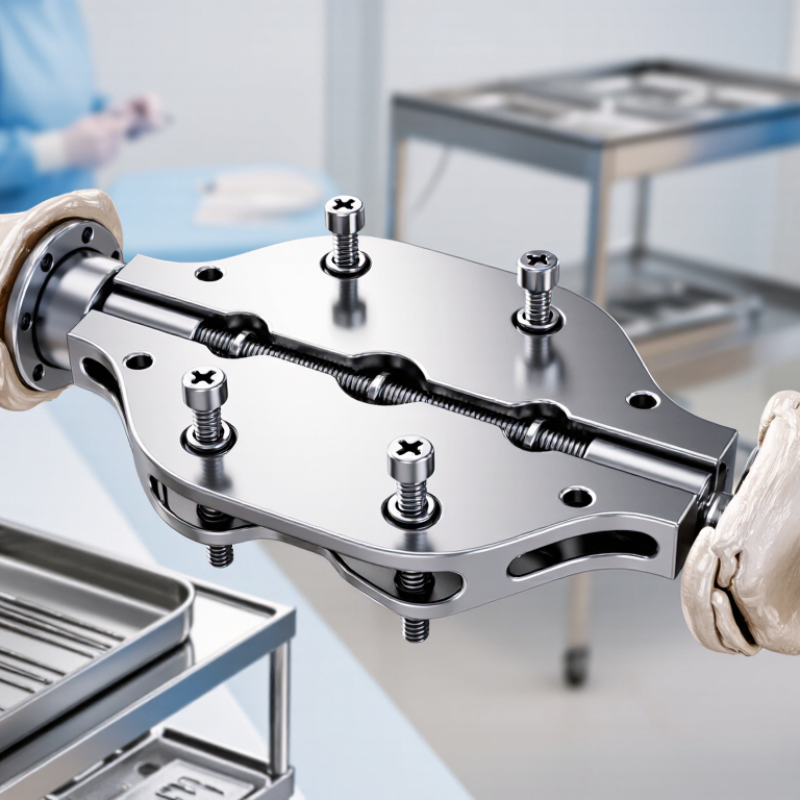
Table of Contents
[Hide]
What Is Locking Plate Technology and How Does It Work?
Why Choose Locking Plate Technology for Global Sourcing?
Locking plate technology uses screws that lock into threaded holes in the plate. This creates a fixed-angle connection between the plate and each screw. Unlike traditional plating, stability does not depend entirely on pressing the plate against the bone. The structure can support alignment while preserving some blood supply around the fracture area.
The mechanism is straightforward but carefully engineered. A surgeon positions the plate, inserts the screws, and tightens each screw into its matching thread. The locked interface helps limit screw movement and may improve stability in weak or fragmented bone. It can also reduce the need for extensive plate contouring. Small details matter. Thread depth, hole accuracy, plate thickness, and screw-head fit all influence performance.
For global sourcing, buyers should examine more than the product drawing. Material certificates, dimensional inspection, fatigue testing, sterilization records, and batch traceability deserve close review. Manufacturing consistency is especially important because a minor thread mismatch can affect the locking connection. Supplier communication must also cover packaging, documentation, and applicable medical-device requirements in each market. Locking plates are not a universal solution. They still require qualified clinical judgment, suitable surgical technique, and careful case selection. Some purchasing decisions focus too heavily on unit price. That approach may overlook inspection costs, training needs, and long-term reliability.
Why Choose Locking Plate Technology for Global Sourcing? - What Is Locking Plate Technology and How Does It Work?
| Data Dimension | Locking Plate Technology | Clinical or Engineering Significance | Global Sourcing Checkpoint |
|---|---|---|---|
| Core Definition | A bone plate system in which the screw head locks into a threaded hole or insert in the plate. | The plate and screw can function as a fixed-angle construct rather than relying only on friction between the plate and bone. | Confirm the supplier’s design definition, intended anatomy, and applicable product classification. |
| How the Locking Mechanism Works | A compatible screw thread engages with the threaded plate hole, creating a locked screw–plate interface. | The screw angle is constrained by the plate design, helping maintain the selected construct geometry. | Verify thread form, hole geometry, allowable screw angles, and compatibility between screws and plates. |
| Bone–Plate Contact | The construct can provide stability without requiring the plate to be compressed tightly against the bone. | Reduced dependence on plate-to-bone friction may help preserve the local periosteal blood supply, although surgical technique remains critical. | Review plate profile, undersurface design, anatomical conformity, and instructions for use. |
| Performance in Osteoporotic Bone | Locked screws may improve construct stability in weaker bone compared with conventional screws that depend more heavily on bone purchase and plate compression. | Useful designs may support fixation in metaphyseal and periarticular regions, but clinical outcomes depend on fracture pattern, reduction, and bone quality. | Request mechanical test data for the relevant indication rather than relying on general claims about osteoporosis. |
| Fixed-Angle Stability | The locked interface helps maintain the intended relationship between the screw and plate. | This can be valuable when fixed-angle support is needed near a joint or in a short bone segment. | Check angular tolerance, screw trajectory, insertion instruments, and validation of the complete system. |
| Plate Design Options | Common configurations include straight, contoured, anatomical, periarticular, compression-capable, and variable-angle designs. | Design selection should match the anatomy, fracture location, required reduction method, and available surgical approach. | Assess the range of sizes, left/right configurations, hole patterns, and customization capability. |
| Materials Commonly Used | Implant plates and screws are commonly manufactured from implant-grade stainless steel or titanium alloys, subject to the intended application and regulatory requirements. | Material selection affects strength, stiffness, corrosion resistance, imaging characteristics, and compatibility with the intended clinical environment. | Request material specifications, certificates, traceability records, and evidence of compliance with applicable implant-material standards. |
| Manufacturing Processes | Typical processes may include precision machining, forming or forging, laser marking, surface finishing, cleaning, packaging, and sterilization when supplied sterile. | Process control influences thread accuracy, fatigue performance, surface condition, cleanliness, and consistency between production lots. | Audit process validation, inspection plans, critical-dimensional controls, and change-control procedures. |
| Quality Testing | Relevant evaluations can include dimensional inspection, thread and locking-interface checks, torque testing, static or fatigue testing, corrosion assessment, and cleanliness testing. | Testing should demonstrate that the finished system meets its specified mechanical and safety requirements. | Ask for test protocols, acceptance criteria, representative sample information, and controlled test reports. |
| Regulatory Documentation | Documentation generally includes technical specifications, risk management records, biocompatibility information, verification and validation evidence, labeling, and manufacturing controls. | Regulatory obligations vary according to jurisdiction, intended use, sterility status, and device classification. | Define the target markets before sourcing and confirm that the documentation supports the required approval pathway. |
| Sterile and Non-Sterile Supply | Systems may be supplied non-sterile for hospital sterilization or sterile in validated packaging, depending on the product configuration and market requirements. | Sterile products require validated sterilization processes, packaging integrity, and defined shelf-life evidence. | Confirm sterilization method, packaging format, expiration dating, transport conditions, and documentation responsibilities. |
| Inventory and Kit Compatibility | Locking plate systems normally require matched screws, drill guides, drivers, depth gauges, and other dedicated instruments. | A plate alone is not a complete clinical solution; interface compatibility is essential for safe use. | Evaluate the complete bill of materials, spare-part availability, instrument standardization, and replacement lead times. |
| Key Sourcing Advantage | A well-controlled locking plate system can offer predictable screw–plate engagement, design flexibility, and suitability for demanding fixation scenarios. | The technology may support consistent clinical workflow, but it does not eliminate the need for correct reduction, implant selection, and surgical training. | Select suppliers based on verified quality systems, technical capability, regulatory readiness, supply continuity, and transparent total cost—not unit price alone. |
Note: Product performance depends on implant design, material, fracture pattern, bone quality, surgical technique, and compliance with the applicable instructions for use.
Related Posts
-
Top 10 Proximal Humeral Plate Manufacturers Worldwide
-

China Best Joint Arthroplasty Procedure Benefits and Considerations?
-
Why You Should Understand Intertrochanteric Femoral Fracture Risks?
-
Top 10 Pelvic Ring Reconstruction Techniques You Should Know?
-

What is Maxillofacial Trauma Surgery and its Importance in Recovery?
-

How to Prepare for Ankle Fracture Surgery in 2026?