
China Best Distal Radius Fracture Plate Manufacturer
Choosing a China Best Distal Radius Fracture Plate Manufacturer requires more than comparing prices or product photographs. It requires evidence of clinical understanding, engineering discipline, and consistent manufacturing control. A dependable supplier should understand the difficult anatomy of the wrist, including variable bone quality, narrow working spaces, and the need for stable fixation during movement. Distal Radius Fracture plates should support accurate reduction while offering practical screw placement, smooth edges, and reliable material performance.
Experience matters here. Manufacturers with orthopedic expertise often combine surgeon feedback, implant design reviews, and controlled production processes. Look for documented material specifications, dimensional inspections, surface treatment records, and lot-level traceability. These details may seem small. They protect consistency.
A professional evaluation should also examine design flexibility. Different fractures may require variable-angle locking holes, multiple plate profiles, or left and right configurations. No single plate fits every patient. That limitation deserves honest attention. A responsible manufacturer explains indications, testing methods, packaging controls, and product boundaries without exaggerated claims. It should also provide clear technical files and responsive communication for distributors, hospitals, and surgical teams.
China has become an important source of orthopedic implants, but supplier quality can differ significantly. Certifications alone are not enough. Review audit results, production capacity, inspection equipment, and post-market feedback. Ask practical questions. Can the factory maintain tolerances across batches? Can it support customization without weakening validation? A careful partnership combines verified data with real clinical experience, helping healthcare providers select Distal Radius Fracture plates that are dependable, practical, and suited to professional use.
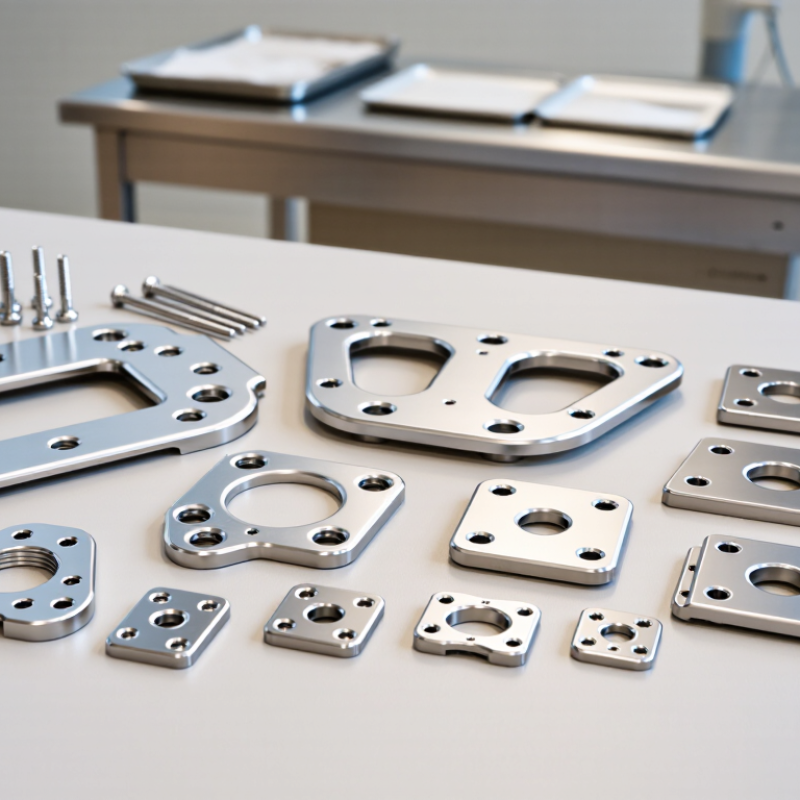
Table of Contents
[Hide]
Distal Radius Fractures: About 18% of Adult Fractures (AO Trauma)
China Best Distal Radius Fracture Plate Manufacturer
Distal radius fractures account for about 18% of adult fractures, according to AO Trauma. This figure shows their clinical importance, especially in emergency and orthopedic care. A simple fall onto an outstretched hand may cause a fracture in an older adult. Sports injuries and road accidents can create more complex patterns in younger patients. Treatment depends on displacement, joint involvement, bone quality, and patient activity.
A reliable distal radius fracture plate manufacturer should combine engineering knowledge with clinical awareness. Plates need accurate contours, stable screw locking, smooth edges, and suitable strength. They should support anatomical reduction without unnecessary soft-tissue irritation. Manufacturing quality also matters. Traceable materials, controlled machining, dimensional inspection, and documented fatigue testing improve confidence. Yet no plate is perfect. Surgeon experience and patient anatomy still influence the result. This point is sometimes underestimated.
Tips: Check plate flexibility, hole design, screw compatibility, and radiographic visibility. Ask for inspection records and material documentation. Review how the plate performs with osteoporotic bone. Small details matter. A useful design should feel practical during surgery, not only impressive in a catalogue. Manufacturers should also listen to surgeons and review complications honestly. Continuous improvement is more credible than exaggerated claims.
Distal Radius Fractures: About 18% of Adult Fractures
Distal radius fractures represent approximately 18% of all fractures in adults. The remaining 82% includes fractures affecting other anatomical sites. This proportion is reported by AO Trauma and is intended to illustrate the relative burden of distal radius fractures among adult fractures.
Source: AO Trauma.
Volar Locking Plates: 2.4–3.5 mm Systems for Stable Fixation
China Best Distal Radius Fracture Plate Manufacturer
Volar locking plates in 2.4–3.5 mm systems support stable fixation of many distal radius fractures. Their low-profile design follows the volar surface and may reduce tendon irritation. Locking screws create a fixed-angle construct, which can help maintain reduction in osteoporotic or comminuted bone.
Small details matter. A surgeon must assess fracture pattern, articular alignment, bone quality, and plate position before fixation. The 2.4 mm system suits smaller fragments and delicate distal anatomy. The 3.5 mm option can provide greater strength for larger fragments or demanding load conditions.
Screw length deserves careful attention. A few millimeters may affect joint safety.
Reliable manufacturing requires more than polished metal. Precise hole geometry, consistent titanium or stainless-steel composition, and dependable screw engagement are essential. Each production stage should support traceability, dimensional inspection, fatigue testing, and documented biocompatibility. Surgical instruments must also fit securely. Poor fit can waste valuable operating time.
Clinical judgment remains central. No plate compensates for inaccurate reduction or weak fixation planning. Even a well-designed construct can fail when the plate sits too distal or screws enter the joint. That is an uncomfortable point, but it deserves attention. Practical feedback from surgeons can improve future designs, especially around contouring, visibility, and instrument handling. Stable fixation begins with anatomy, continues through manufacturing, and depends on careful technique.
China Manufacturer Standards: ISO 13485, NMPA Registration, and CE Marking
China Best Distal Radius Fracture Plate Manufacturer
A capable distal radius fracture plate manufacturer needs more than machining accuracy. It needs a controlled quality system. ISO 13485 provides the framework for design control, risk management, supplier evaluation, and production records. These controls should be visible in daily work, not only during an audit.
For each plate, engineers can review contour, screw-hole position, edge finish, and material traceability. Inspection reports should connect raw material batches with finished devices. Fatigue and dimensional testing help assess performance before release. Small details matter. A sharp edge can affect handling. Poor documentation can delay corrective action. Experience shows that even a mature process can contain gaps, so internal audits and design reviews must remain active.
NMPA registration is essential for lawful market access in China and requires appropriate technical and clinical documentation. The submission should match the actual device, manufacturing site, intended use, and risk classification. CE marking for the European market requires conformity with applicable medical device requirements, including technical files, clinical evaluation, and post-market surveillance. The route may vary by device classification and current regulation. It should never be treated as a simple logo.
Reliable manufacturers maintain controlled changes, complaint records, and supplier oversight after registration. They also communicate limitations clearly. No certificate replaces sound engineering, trained operators, or careful surgeon feedback. That is where credibility is tested.
China Best Distal Radius Fracture Plate Manufacturer - China Manufacturer Standards: ISO 13485, NMPA Registration, and CE Marking
| Compliance Dimension | Applicable Standard or Framework | Factual Requirement or Evaluation Point | Typical Objective Evidence | Relevance to Distal Radius Plates |
|---|---|---|---|---|
| Quality management system | ISO 13485:2016 | The manufacturer should operate a medical-device quality management system covering design, production, supplier control, process validation, traceability, complaint handling, and corrective actions. | Valid certificate, scope statement, internal audit records, design-control records, supplier qualification files, and corrective-action records. | Supports consistent production and controlled documentation for implantable orthopedic fixation products. |
| China market registration | NMPA medical device registration framework | A device placed on the Chinese market must follow the applicable NMPA classification, registration, filing, testing, clinical evaluation, and post-market requirements. | Registration certificate or filing documentation, approved product technical requirements, product description, testing reports, and clinical evaluation materials where applicable. | Confirms that the specific product configuration is authorized for the intended Chinese market use. |
| European market access | Regulation (EU) 2017/745 on medical devices (EU MDR) | The device must meet applicable general safety and performance requirements, undergo conformity assessment, and maintain technical documentation and post-market surveillance. | EU Declaration of Conformity, technical documentation, risk-management file, clinical evaluation, labeling, and post-market surveillance plan. | Provides the regulatory basis for supplying the plate in applicable European markets. |
| CE conformity assessment | CE marking under the applicable EU MDR conformity-assessment route | CE marking may be affixed only after the applicable conformity-assessment procedure has been completed and the manufacturer has prepared the required declaration of conformity. | Declaration of Conformity, certificate from a notified body when required, CE-marking artwork, and authorized-representative details where applicable. | Helps buyers verify that the claimed European conformity route matches the product and its classification. |
| Risk management | ISO 14971:2019 | Risks must be identified, evaluated, controlled, and monitored throughout the product life cycle, including risks associated with use, manufacturing, and post-market information. | Risk-management plan, hazard analysis, risk-control measures, benefit-risk assessment, and residual-risk evaluation. | Addresses risks such as plate deformation, screw-related complications, breakage, corrosion, and tissue or bone interaction. |
| Biological evaluation | ISO 10993 series | Biological safety should be evaluated using a risk-based approach appropriate to the materials, contact type, contact duration, and intended clinical use. | Biological evaluation plan and report, material characterization, and applicable biocompatibility test reports. | Relevant because the plate and screws may remain in contact with tissue and bone for an extended period. |
| Sterilization and sterile barrier | ISO 11135, ISO 11137, ISO 17665, and ISO 11607, as applicable | The applicable sterilization method and sterile-barrier system must be validated when the product is supplied sterile. | Sterilization validation, packaging validation, seal-strength or integrity testing, and shelf-life data. | Separates sterile supply claims from products supplied non-sterile for hospital sterilization. |
| Mechanical performance | Product-specific specifications and applicable recognized test methods | Performance verification should address the intended anatomical location, fixation concept, loading conditions, dimensional tolerances, and compatibility with the specified screws or instruments. | Static and fatigue test reports, dimensional inspection records, design verification protocols, and validation summaries. | Helps demonstrate suitability for fracture fixation and alignment support in the distal radius. |
| Materials and surface condition | Applicable material specifications and controlled manufacturing procedures | Material grade, heat treatment, surface finish, corrosion resistance, and traceability should be defined and controlled according to the product specification. | Material certificates, incoming inspection records, surface-finish inspection, corrosion-related evaluation, and lot traceability. | Supports material consistency and helps control potential adverse reactions or premature product failure. |
| Traceability and labeling | Applicable NMPA and EU MDR labeling requirements | Labels and instructions should identify the device, applicable identifiers, manufacturer or responsible economic operator details, intended use, warnings, and storage or handling information. | Label artwork, instructions for use, lot or serial-number procedure, UDI information where required, and packaging records. | Enables product identification, surgical-use control, complaint investigation, and recall management. |
| Post-market surveillance | ISO 13485, ISO 14971, NMPA requirements, and EU MDR requirements | The manufacturer should collect and evaluate complaints, adverse events, nonconformities, service data, and other post-market information. | Complaint-handling procedure, vigilance reports, trend analysis, corrective-action records, and periodic post-market reports where applicable. | Provides ongoing monitoring of clinical and manufacturing performance after market release. |
Note: Applicable requirements may vary according to product configuration, intended use, sterility status, risk classification, market, and the latest regulatory guidance.
Implant Materials: Titanium and Stainless Steel per ASTM F136 and F138
China Best Distal Radius Fracture Plate Manufacturer
Distal radius fractures remain among the most frequent upper-limb injuries. A population review reported annual incidence near 195 to 280 cases per 100,000 women and 80 to 160 cases per 100,000 men. The figures vary by age, geography, and reporting method. Still, they show why dependable plate materials matter.
Titanium alloy manufactured to ASTM F136 offers low density, strong corrosion resistance, and useful imaging compatibility. Its lighter feel can support easier handling during surgery. Stainless steel manufactured to ASTM F138 provides high strength, stiffness, and long clinical familiarity. It can be practical when surgeons need firm fixation around a complex fracture. The choice is not automatic. Bone quality, fracture pattern, screw length, and soft-tissue coverage all influence performance.
Material certificates are only one part of quality. A credible manufacturer should maintain heat-lot traceability, chemical analysis, mechanical testing, surface inspection, and validated cleaning processes. ASTM F136 and F138 define material requirements; they do not independently prove a finished plate’s clinical suitability. That distinction is easy to miss. It deserves attention.
Reports from the International Organization for Standardization emphasize risk-based quality systems for medical devices. In practice, engineers should also review fatigue data, hole geometry, bending behavior, and sterilization compatibility. Small design errors can become visible at the wrist. Titanium may reduce artifact concerns, yet stainless steel can offer higher elastic modulus. Neither material is universally better. Better decisions come from evidence, surgeon feedback, and transparent test records.
How to Compare China’s Best Plates: Design, Testing, Sterilization, and Supply Data
China Best Distal Radius Fracture Plate Manufacturer
How to Compare China’s Best Plates: Design, Testing, Sterilization, and Supply Data
A reliable distal radius plate should match anatomy, not merely look polished. Review screw trajectories, plate thickness, edge smoothness, and left-right configurations. Fit matters. Ask for drawings that show holes, angles, and allowable screw lengths. A useful design supports stable fixation while limiting soft-tissue irritation. Surgeons should also check intraoperative visibility and instrument handling. Small details become important under time pressure.
Testing data deserves closer attention. Request material certificates, dimensional inspection records, fatigue results, and pull-out testing methods. Do not accept a single pass statement without test conditions. Compare sample sizes, loading cycles, failure definitions, and applicable standards. An experienced quality team can explain differences clearly. If answers remain vague, pause. That gap matters. Some suppliers provide impressive reports, but their samples may not represent routine production.
Sterilization compatibility must match the intended packaging and process. Review cleaning instructions, residual limits, seal integrity, and shelf-life evidence. Confirm whether the implant is supplied sterile or non-sterile. Supply data also needs practical detail: monthly capacity, lead time, batch traceability, inspection rates, and backup material sources. Ask for recent production records, not only promises. A weakness in this review is that no document replaces hands-on assessment. Even a well-tested plate may require surgeon feedback after trial fitting. Recheck assumptions.
Related Posts
-
How to Prepare for Ankle Fracture Surgery in 2026?
-

What is Cannulated Screw Fixation and How Does It Work?
-
10 Essential Tips for Choosing Bone Graft Substitutes for Successful Surgery?
-
What is Cervical Disc Replacement and How Does it Work?
-

2026 How to Prepare for Limb Lengthening Surgery Effectively?
-
How to Choose the Right Distal Femoral Plate for Surgery?